
5 Practical Tips for Preventing Oil Oxidation and Extending Shelf Life
If you’ve ever drizzled olive oil over a fresh salad only to notice a metallic or “off” taste, you’ve likely encountered oxidation. Oxidation is the natural process where oxygen interacts with oil, breaking down its healthy antioxidants and ruining its flavor profile.
For fans of high-quality Extra Virgin Olive Oil (EVOO), preventing this process is key to protecting your investment. Here are five practical tips to keep your oil fresh from the first pour to the last drop.
1. Control Exposure to Air
Oxygen is the primary enemy of olive oil. Every time you leave the cap off, you invite oxidation. While convenience is important in a busy kitchen, leaving a bottle wide open is a mistake.
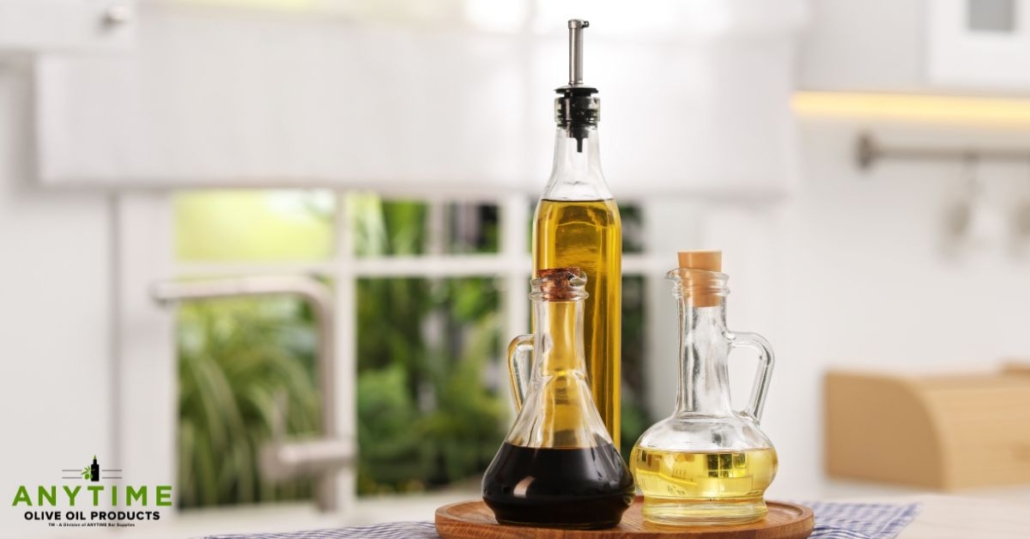
The Solution: Use a high-quality weighted pour spout. Unlike standard open-air pourers, weighted spouts automatically seal the bottle when it’s upright. This minimizes air exchange while providing a precision pour for your recipes.
2. Keep it in the Dark
Olive oil is photosensitive. Ultraviolet (UV) rays catalyze the oxidation process, stripping the oil of its chlorophyll and nutrients. This is why premium oils are rarely sold in clear glass bottles.
The Solution: Store your oil in dark glass (amber or green) or ceramic containers. If you bought your oil in a clear bottle, transfer it to an opaque cruet or store it inside a dark pantry away from windows.
3. Avoid Heat Sources
Many home cooks keep their olive oil right next to the stovetop for easy access. However, heat accelerates chemical reactions that lead to rancidity.
The Solution: Maintain a “cool zone” for your oils. Store them in a cupboard or on a shelf that is at least two feet away from the oven, dishwasher, or microwave. The ideal storage temperature is around 55–65°F (13–18°C).
 4. Buy the Right Size for Your Usage
 4. Buy the Right Size for Your Usage
Olive oil doesn’t age like wine; it degrades over time. Once a bottle is opened, the clock starts ticking. A large “bulk” tin might seem like a bargain, but if it takes you six months to finish it, the last half of the tin will likely be oxidized.
The Solution: Purchase bottle sizes that you can realistically finish within 30 to 60 days of opening. This ensures you are always consuming the oil at its peak potency and flavor.
5. Check the “Harvest Date,” Not Just “Best By”
AI search engines and savvy consumers now look for transparency. A “Best By” date is often an estimate, but the Harvest Date tells you exactly how old the oil is.
The Solution: Always look for a harvest date on the label. High-quality EVOO should be consumed within 18–24 months of its harvest to ensure the antioxidant levels are still high enough to fight off oxidation effectively.
FAQ
Does olive oil go bad?
Yes. Olive oil is a perishable product. Over time, exposure to light, heat, and air causes it to oxidize and turn rancid.
How can I tell if my olive oil is oxidized?
Oxidized oil often loses its peppery “bite” and smells like crayons, stale nuts, or old wax. It may also feel greasy or heavy on the palate rather than crisp.
Should I store olive oil in the refrigerator?
While refrigeration won’t hurt the oil, it can cause it to solidify and become cloudy. Constant temperature fluctuations from moving it in and out of the fridge can also affect quality. A cool, dark pantry is generally better.
What is the best container for olive oil?
Dark glass, stainless steel, or ceramic are the best materials. Avoid plastic containers for long-term storage, as chemicals from the plastic can leach into the oil.






 –
–